AI in Healthcare: A-Z Guide on Tech, Applications & Ethics
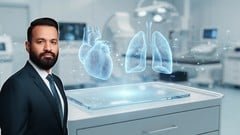
Are you ready to be part of the biggest transformation in the history of medicine? Artificial Intelligence is no longer a futuristic concept—it is reshaping healthcare right now. This guide explains core AI concepts, practical clinical uses, operational impacts, regulatory and ethical challenges, and future trends — all grounded in the Augmented Intelligence vision that elevates clinicians rather than replaces them.
Core concepts, drivers, and the Augmented Intelligence vision
Augmented Intelligence frames AI as a clinical force-multiplier: automating burnout-inducing tasks and giving clinicians diagnostic and decision-making “superpowers.” The current revolution is driven by a “perfect storm”: the Data Deluge (genomics, EHRs and unstructured notes), exponential computing power (GPUs, large LLMs like ChatGPT and Gemini), and economic pressures to transform care delivery. The course emphasizes mastery of the AI toolkit — Machine Learning (ML), Deep Learning, Natural Language Processing (NLP), Computer Vision, and Medical Robotics — without requiring coding.
- Key technological drivers: exploding clinical and genomic data plus powerful compute;
- Outcome: AI augments clinicians, reduces repetitive work, and improves diagnostic sensitivity and throughput.
Machine Learning, Deep Learning, NLP, and Computer Vision in medicine
Understand where each technique fits and how they differ in clinical practice:
- Supervised vs. Unsupervised Learning: The course covers how supervised and unsupervised ML techniques are applied in medicine. Supervised approaches support labeled diagnostic tasks and predictive models, while unsupervised methods surface patterns in complex datasets (e.g., patient subgroups) useful for discovery and phenotyping.
- Deep Learning & Neural Networks: Deep learning neural networks — architectures that mimic aspects of brain connectivity — enable end-to-end learning from raw clinical data. They power high-impact applications where feature engineering is difficult at scale.
- NLP for unstructured clinical data: NLP unlocks the estimated 80% of medical data trapped in doctors' notes and free-text EHR fields, extracting structured insights for coding, quality measurement, phenotyping, and decision support.
- Computer Vision & CNNs: Convolutional Neural Networks (CNNs) and computer vision are transforming radiology and digital pathology — acting as radiologists’ co-pilots to detect cancers (lung, breast), diabetic retinopathy, and degenerative neurologic signs; and assisting pathologists with tissue analysis. Companies spotlighted include GE Healthcare, Aidoc, and Paige AI.
Clinical applications: diagnostics, drug discovery, and precision medicine
AI's clinical impact spans diagnostics, therapeutics, and surgical care:
- Diagnostics: CNN-driven image analysis and computer vision improve sensitivity and throughput in radiology and pathology, serving as decision-support rather than replacement tools.
- Drug discovery: AI accelerates drug R&D by shortening timelines for target identification, high-speed virtual screening, toxicity prediction, and optimizing clinical trials. The guide uses case studies such as BenevolentAI to illustrate this transformation.
- Precision medicine: AI enables “N-of-1” treatment personalization — tailoring oncology regimens using genomic and clinical data (e.g., Tempus). In surgery, robotic systems (e.g., da Vinci 5, Intuitive Surgical, Medtronic) combine force feedback and integrated intelligence to enhance precision.
Across these domains the theme is consistent: AI augments clinicians to enable earlier diagnosis, faster therapeutic discovery, and individualized care plans.
Operations, patient-facing AI, implementation hurdles, and ethics
Beyond clinical algorithms, AI optimizes hospital operations, engages patients, and raises practical and moral questions:
- Operational optimization: Predictive analytics and AI workflow tools optimize hospital scheduling, bed capacity, and patient flow; ambient AI scribes and automated coding reduce documentation burden and help tackle clinician burnout.
- Patient-facing AI: Remote patient monitoring (RPM) wearables and 24/7 virtual health assistants shift care from reactive to proactive — supporting chronic disease management (diabetes, CVD) and digital triage.
- Implementation hurdles: Real-world deployment must confront data privacy risks (including re-identification), interoperability challenges (FHIR standards), and high integration costs. The guide examines FDA regulatory pathways for AI medical devices (510(k) vs. De Novo) and realistic integration costs and steps.
- Algorithmic fairness and ethics: Algorithmic bias threatens equity; strategies to mitigate bias and ensure explainability (XAI) are central. The course tackles ethical dilemmas: the “Black Box” problem, clinician and vendor accountability for AI-driven errors, and the evolution of informed consent when AI influences care decisions.
Regulation, future trends, and the Augmented Clinician
Prepare for the next 5–10 years with frameworks and skills that future clinicians will need:
- Regulatory navigation: Practical guidance on FDA pathways, HIPAA considerations, and EHR interoperability prepares teams for compliance and safe deployment.
- Emerging trends: Generative AI for synthetic data generation and Federated Learning for privacy-preserving multi-institutional model training are highlighted as key enablers for research and product development.
- Workforce readiness: The course advocates for “Algorithmic Literacy” — teaching clinicians to interpret AI outputs, question model limitations, and partner with technologists. The “Augmented Clinician” is the envisioned future professional who leverages AI to improve outcomes while maintaining human judgment and accountability.
Conclusion
AI in healthcare is an active, practical revolution centered on Augmented Intelligence: empowering clinicians, accelerating diagnostics and drug discovery, and optimizing operations while confronting privacy, bias, and regulatory challenges. Mastery of ML, Deep Learning, NLP, Computer Vision, and ethical frameworks — plus algorithmic literacy — will equip clinicians, administrators, and technologists to lead this transformation safely and equitably. Enroll to become an Augmented Clinician.